RTS Link alignment
Bukit Chagar to Woodlands North.
Malaysia’s Southern Growth Story
Discover how the RTS Link and JS-SEZ may reshape jobs, business activity and property demand in Johor.
◉ Research-led • No guaranteed returns
The short answer
Johor Bahru City Centre is the Malaysian gateway beside Singapore. The RTS Link is designed to improve cross-border public transport, while the JS-SEZ is intended to attract higher-value investment and make regional business activity easier.
For property investors, the opportunity is not simply “buy near a train.” The investment case is that better mobility, job creation and business growth may expand the pool of residents, commuters and tenants who value a central JB location.

Bukit Chagar to Woodlands North.
Peak capacity in each direction.
Including Johor Bahru Waterfront.
Official five-year ambition, not a forecast.
01 — Connectivity
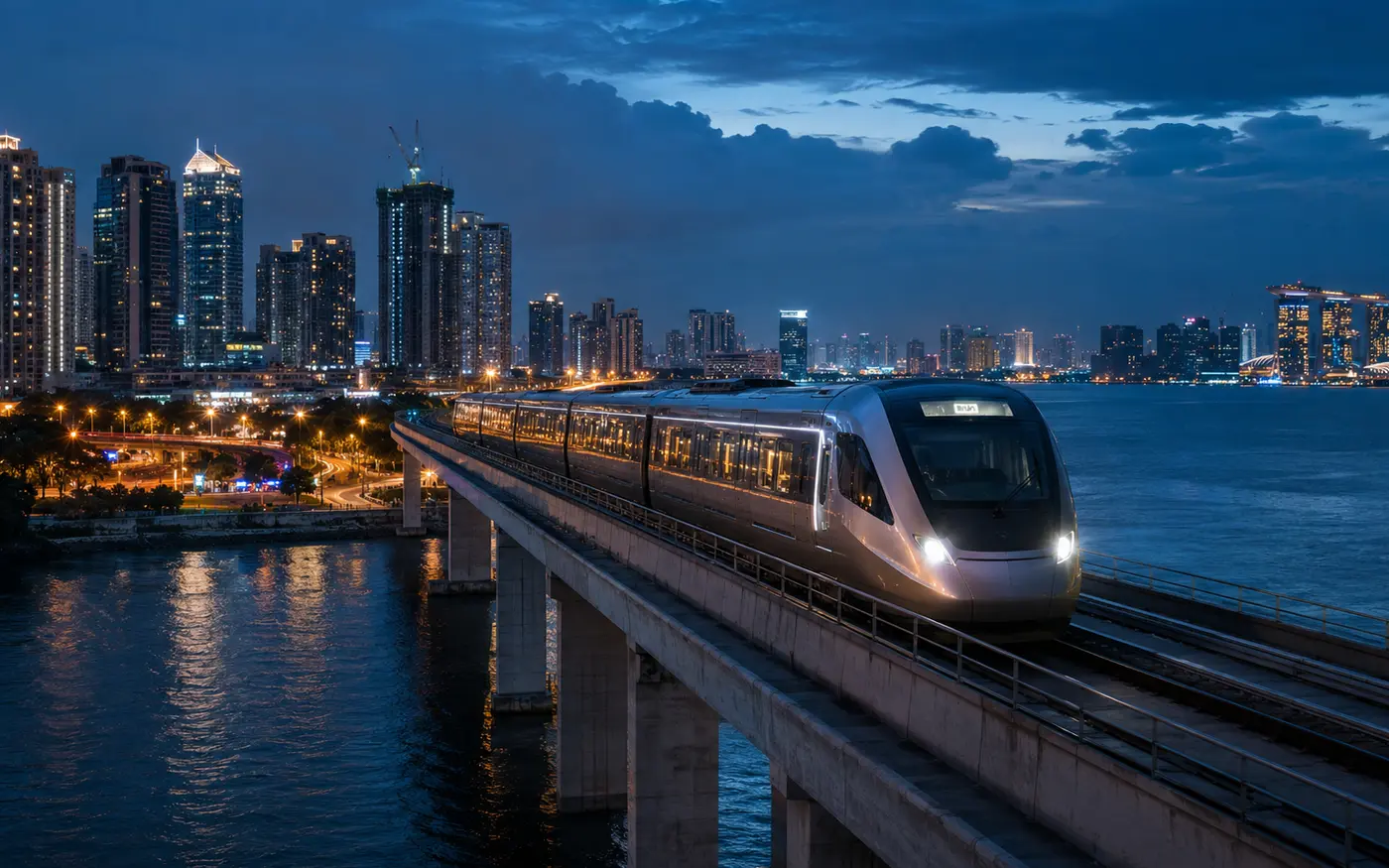
A planned four-kilometre cross-border rail service between Bukit Chagar and Woodlands North, targeted for service commencement by the end of December 2026.
02 — Economic activity
A Malaysia–Singapore initiative that combines Johor’s land and cost advantages with Singapore’s capital, infrastructure and global business connections.

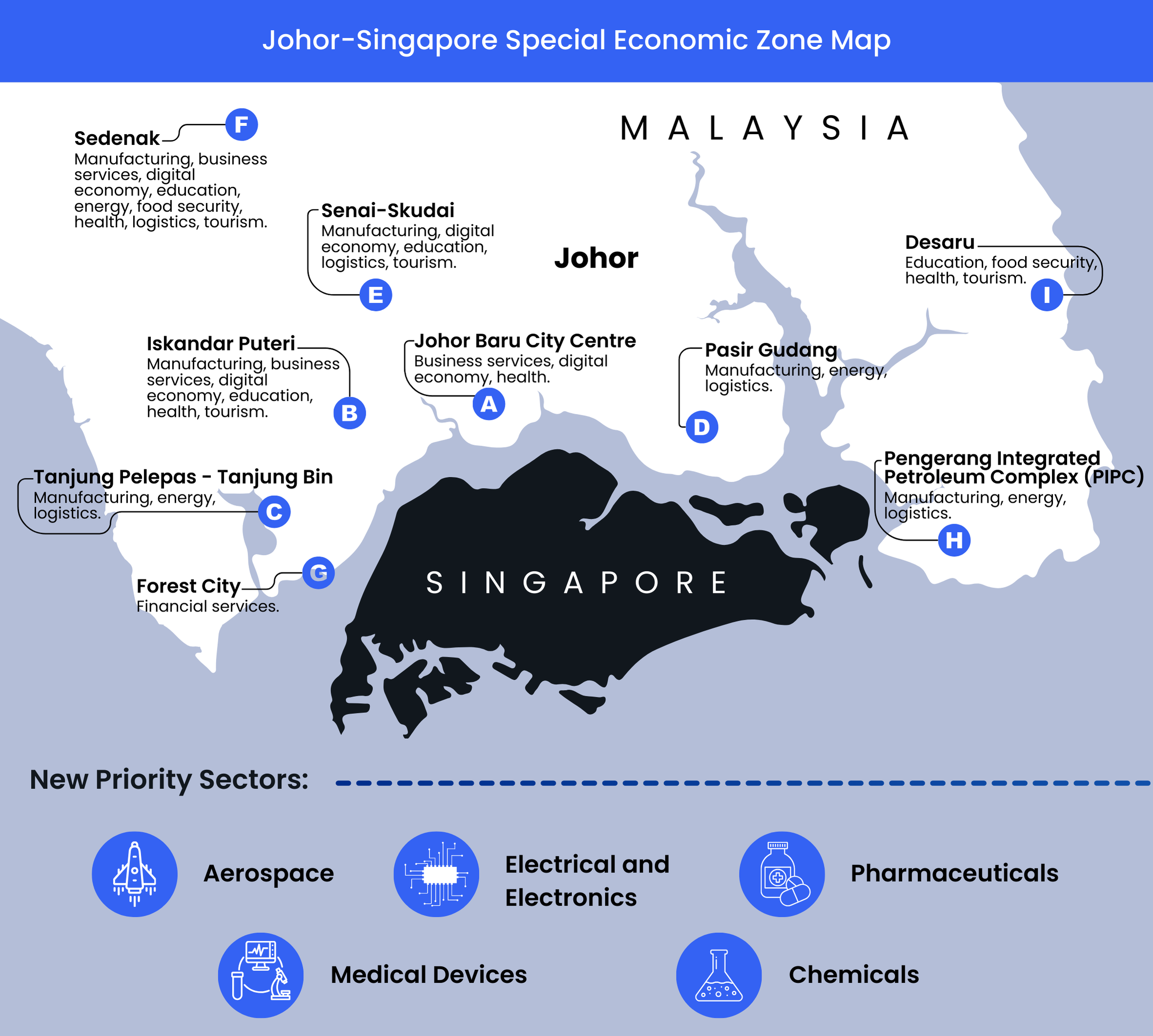
JS-SEZ zoning map
The JS-SEZ spans nine designated areas across southern Johor. Each flagship supports a different mix of sectors, infrastructure and investment activity.

Potential transmission path
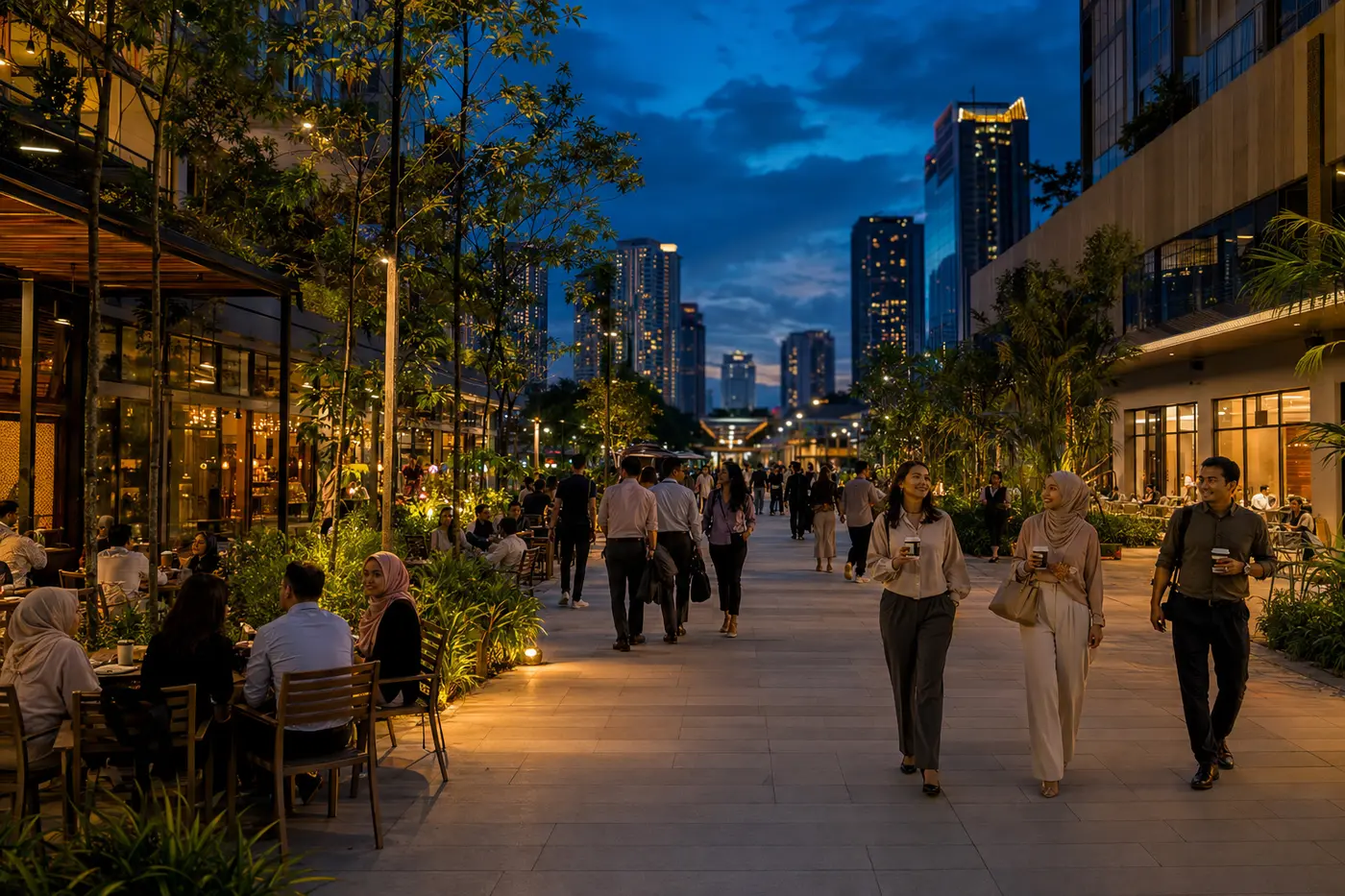
New companies, facilities and supporting businesses establish operations.
More skilled roles may attract workers and increase local spending power.
RTS can make selected cross-border journeys more predictable.
Well-connected homes may serve residents, tenants and commuters—but supply still matters.
This pathway is an investment thesis, not a promise. Outcomes depend on delivery, adoption, economic conditions, property supply and the specific unit selected.
How investors may participate
A stronger market story cannot rescue a weak purchase. Use the growth narrative as context, then test the numbers property by property.

Prioritise practical access, transport reliability, security, layouts and a rent that remains competitive with surrounding supply.
Look for employment access, daily conveniences, sensible layouts and building management that supports long-term occupancy.
Buy a home you can comfortably hold while treating capital appreciation as potential upside—not the repayment plan.
Before you reserve
Frequently asked questions
Written in an answer-first format so buyers—and search or AI systems—can understand the subject without guessing.
Explore the complete property FAQ →
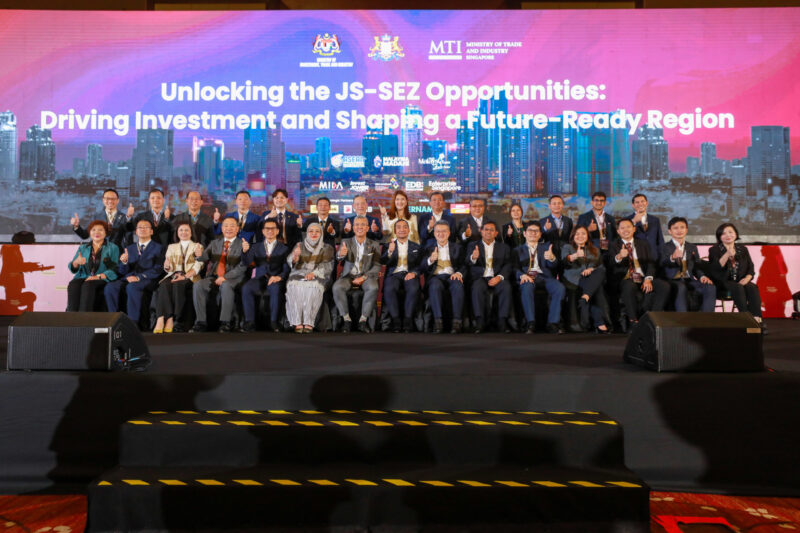
The JS-SEZ is a cross-border economic initiative established by Malaysia and Singapore through an agreement signed on 7 January 2025. It is designed to attract investment, improve the movement of people and goods, and strengthen the regional business ecosystem.
Yes. Johor Bahru Waterfront, which includes the city-centre growth corridor, is one of nine JS-SEZ flagship zones identified by investment agencies.
JBCC is Malaysia’s closest city-centre gateway to Singapore. Its opportunity is linked to cross-border connectivity, urban renewal and the wider JS-SEZ business plan, but every purchase must still be tested against price, rent, supply and holding costs.
Buying a JBCC property is an indirect way to participate in possible population, employment and business growth. You are not investing in the JS-SEZ itself and do not automatically receive its corporate incentives. Your outcome depends on the specific property, tenant demand, entry price, financing, management and future supply.
Malaysia’s Ministry of Transport states that the four-kilometre RTS Link is targeted to commence service by the end of December 2026, connecting Bukit Chagar and Woodlands North.
The potential benefit is broader than the owner’s own journey. Faster and more predictable cross-border access may make selected JBCC homes more useful to Malaysian professionals working in Singapore, Singapore-based tenants, business travellers, relocating employees and families who value access to both cities. Actual demand will vary by location, rent, layout and building quality.
They may support demand by improving cross-border access and encouraging jobs, business activity and talent movement. However, property performance also depends on purchase price, supply, unit type, management, financing and the wider economy.
Possible outcomes include rental income, long-term capital appreciation, personal use as a JB city home, or a combination of these. A well-selected property may also provide exposure to future demand created by better connectivity and economic activity. None of these outcomes is guaranteed, and investors should prepare for vacancy, repairs, interest-rate changes and slower resale periods.
Depending on the property, potential tenants may include Malaysians working in Singapore, local and relocating professionals, couples, small families, corporate tenants, students or healthcare and service-sector workers. Investors should choose one primary tenant profile and confirm that the unit size, furnishing, access and asking rent match that group.
Yes, but remote ownership needs a clear operating plan. Before buying, identify who will handle viewings, tenant screening, rent collection, repairs, inspections and emergencies. Include agent, management, travel and vacancy costs in the investment calculation instead of treating them as unexpected expenses.
There is no single best type. A compact unit may be easier to furnish and rent but can face more competing supply. A larger or dual-key layout may serve a wider strategy but usually costs more to buy and maintain. Start with the intended tenant and realistic rent, then compare total cost, efficiency, management quality and competing units.
Calculate the down payment, legal and stamp-duty costs, loan instalment, maintenance and sinking fund, assessment and quit rent, insurance, furnishing, repairs, agent fees, vacancy and travel or property-management costs. Test the investment using a conservative rent and an emergency buffer rather than the highest advertised rental figure.
No. JS-SEZ incentives are designed mainly for qualifying companies, activities and eligible talent under specific rules. Purchasing a residential or serviced property does not automatically qualify the buyer for a special tax rate, guaranteed rental return or capital gain. Obtain professional tax and legal advice for your own circumstances.
Not necessarily. Distance matters, but investors should also inspect the actual walking route, shade and shelter, road crossings, security, noise, layout, building management, entry price and competing supply. A slightly farther property with better liveability and value can sometimes serve tenants more effectively.
Buying earlier may offer more choice or a lower entry point, but it also carries construction, timing and market-execution risk. Waiting may provide clearer evidence of travel patterns and rental demand, although pricing may change. The right decision depends on your cash buffer, holding period and whether the current property numbers already make sense without relying on future appreciation.
Property is generally better evaluated as a medium- to long-term asset rather than a quick flip. Your holding plan should allow time for infrastructure completion, tenant-market development and transaction costs to be absorbed. Use a time horizon that you can finance comfortably even if rent or resale conditions are temporarily weaker than expected.
No. Projects and unit types can perform differently even within the same Johor Bahru corridor. Compare net rental yield, competing supply, liquidity, financing, management quality, access and the suitability of the unit for its intended tenant.
No. Infrastructure and economic growth can create demand drivers, but neither appreciation nor rental income is guaranteed. Investors should compare entry price, competing supply, achievable rent, costs and holding period.
Start with a clear tenant profile, walking or transport access, realistic achieved-rent evidence, total monthly holding costs, development and management quality, future supply, loan affordability and an exit plan. Avoid choosing a property based only on distance to RTS or a projected return shown in marketing material.
Begin with a remote comparison of location maps, actual walking routes, floor plans, all-in purchase costs, maintenance fees, competing rents and available supply. Shortlist only the options that fit your tenant and budget, then arrange a physical or live-video inspection before making a reservation or signing documents.
Research & accountability
Last reviewed: 3 August 2026. Facts may change; verify current policy, construction and eligibility before acting.

Independent property guidance
Get a practical comparison of JBCC locations, layouts, entry costs, rental positioning and holding risks.
Request a JBCC consultation →